Growth changes a furniture brand’s supply problem. An early collection may be managed through a few individual orders, but more beds, mattresses, sofas, and destinations create dependencies between products. A bed and mattress have to fit together; packaging choices affect storage; replenishment requires the next shipment to match what customers already bought. Strategy begins by mapping those dependencies before adding more suppliers or models.
A growing brand does not need every item to follow the same production route. It does need a common way to identify versions, forecast quantities, and decide when a design change reaches the market. The supply chain becomes easier to expand when product development, order planning, and logistics share the same records.
Build Around Product Relationships
A bedroom set creates compatibility questions across separate products. Mattress dimensions must match the intended bed, while a sofa and matching pieces may share fabrics or a visual theme. A brand can define collection-level rules for dimensions, colors, labels, and packaging, then let each item retain its own technical specification. A mattress manufacturer that also handles related furniture may simplify coordination, but compatibility still needs a drawing, sample, or measurement check.
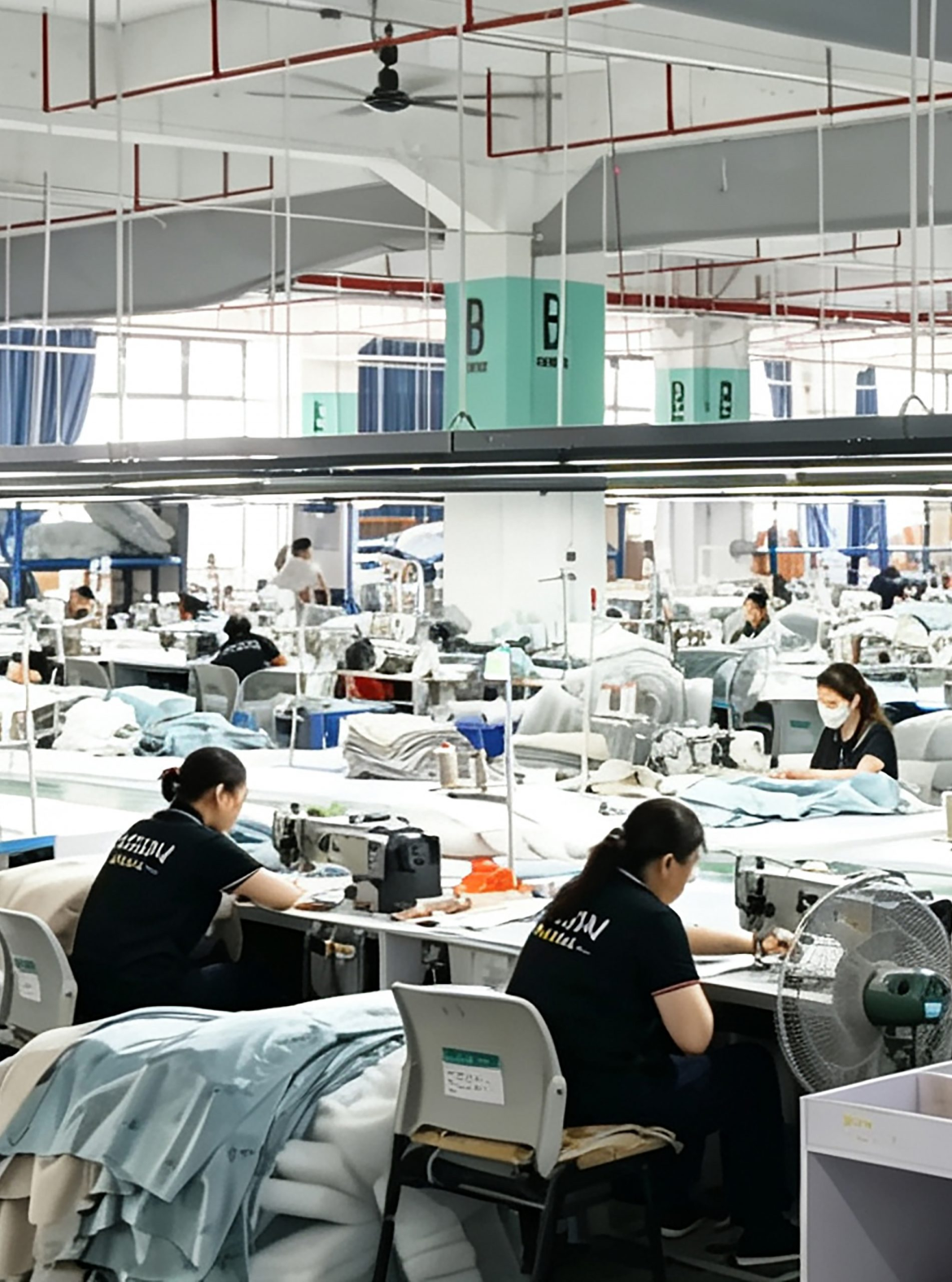
Suisin Furniture combines mattress, bed, sofa, and matching-furniture production with R&D, quality control, packaging, and export service. Its reported 200,000 m² production base supports OEM and ODM work. That breadth is relevant when a brand wants coordinated collections, although each product type requires its own approval and inspection criteria. One contact point does not make every component interchangeable.
A collection plan should also separate stable products from experiments. A core mattress may justify repeat orders, while a new sofa configuration may need a small trial and design feedback. The two should not be forced into the same approval schedule. Clear product roles help the brand focus sampling on the products with the greatest uncertainty.
Connect Inventory to the Right Version
As volumes increase, inventory errors become harder to see. Two mattresses with the same cover can differ in internal materials; two cartons with similar marks can contain different sizes. Model codes and version dates allow the brand to connect stock, customer descriptions, and supplier documents. A mattress supplier can support replenishment only if the order names the approved version rather than a broad product family.
Mixed product selections can be useful when a brand needs several models in one shipping program. They can also complicate quantity rules, packing lists, and warehouse receiving. Suisin Furniture describes wholesale programs with private labeling, samples, mixed selections, customized sizes and materials, and different packing methods. A growing brand should ask how those options are documented for each line of the purchase order.
Forecasting is more reliable when it distinguishes demand by model and destination. A popular size in one market may not justify increasing every version. The brand can track sell-through and replacement requests against the exact specification, then adjust the next order. Feedback without version identity can lead to unnecessary design changes or the wrong inventory response.
Design Packaging for the Route
Logistics decisions can begin during product design. A compressed mattress may occupy less container and warehouse volume if its construction is suitable for that method. A conventional package may be preferable for another model or sales channel. A mattress manufacturer should discuss actual carton dimensions, protection, and receiving conditions before a projected volume saving becomes part of the business plan.
Reduced shipping volume is the stated purpose of the compressed mattress option in Suisin Furniture’s range. It also reports international supply to more than 60 countries. These facts make export and packing capabilities relevant to a discussion, but destination requirements and the chosen model still determine the practical route. A brand needs shipment documents and labels that match its own receiving system.
The supply plan should identify who owns discrepancies. A damaged carton, wrong size, or substituted material has a different remedy, and the supporting records differ. Inspection reports, packing lists, and approved samples let the brand locate the point where an error occurred. That ability becomes more important as distance and order frequency increase.
Supplier concentration also matters. A broader program under one company may reduce coordination, but the brand still needs responsibilities for each category and an alternative for critical items. Brands can compare shared development with the risks of depending on one production schedule. The comparison should be made against actual lead times, item volumes, and the cost of a missed replenishment window.
Grow Without Losing Traceability
Growth is sustainable when the brand can repeat successful products and revise weaker ones deliberately. A mattress supplier or mattress manufacturer contributes through sample control, reliable version records, and shipment preparation, not simply through a wider catalog. The supply chain should connect each product to a market role and each reorder connect to its approved reference.
Suisin Furniture’s integrated production and export offering illustrates one possible coordination model. Its value for a particular brand depends on whether beds, mattresses, and other furniture can be specified, checked, and replenished as a coherent collection. Scale helps only when the product record stays legible as the collection grows.